












Short answer
An air source heat pump can provide space heating and hot water, but suitability depends on heat loss, system design and available space. Ask for a room-by-room assessment and an itemised proposal rather than choosing by floor area or promised savings alone.
How an air source heat pump heats your home
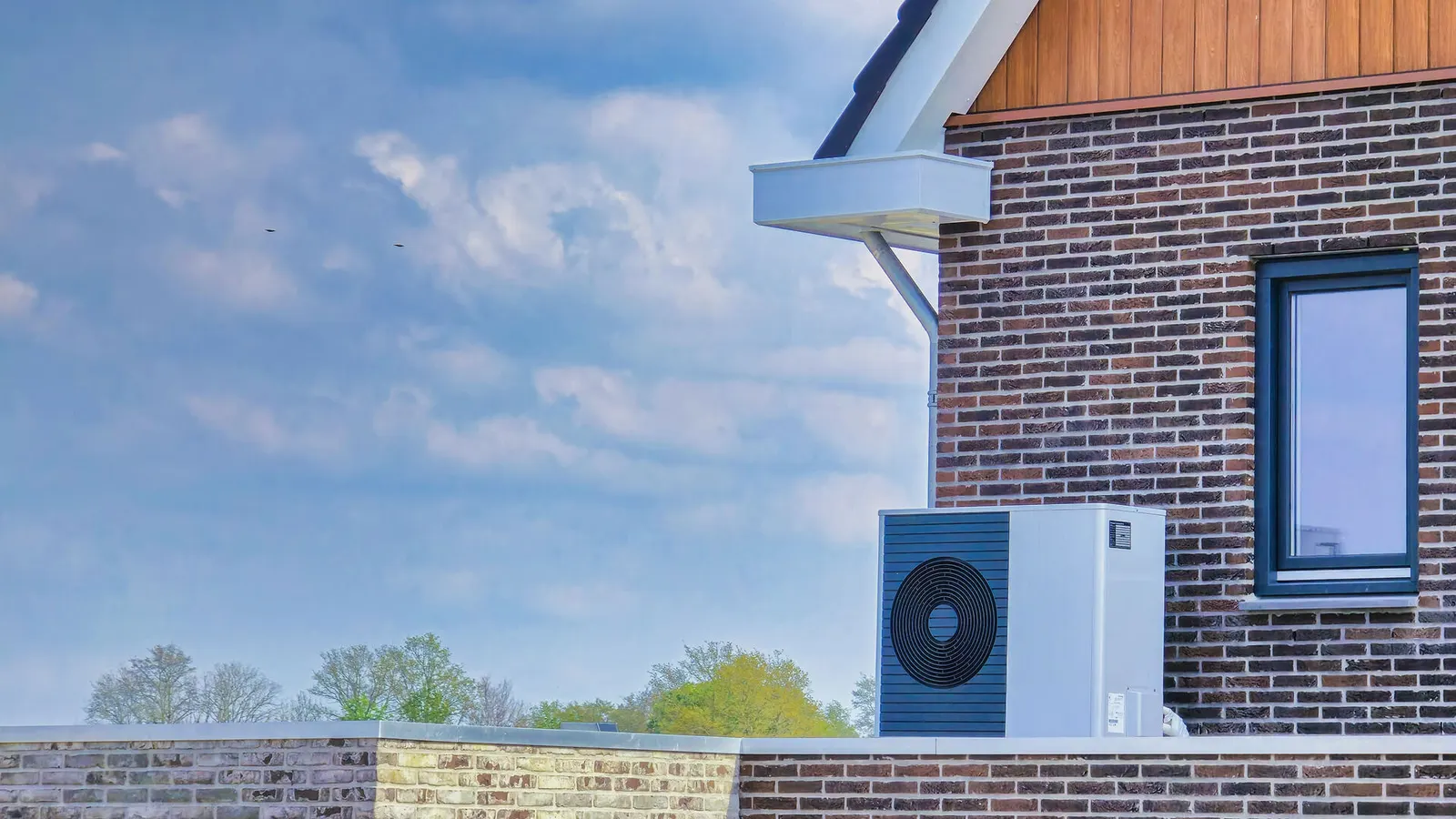
An air-to-water heat pump takes heat from outdoor air and transfers it into water serving radiators or underfloor heating. A cylinder normally stores domestic hot water. It uses electricity to move heat rather than generating all its useful heat through direct electrical resistance. Performance changes with outdoor conditions and the temperature the heating system needs.
Do not confuse this arrangement with an air-to-air system, which warms or cools rooms by moving air through indoor units. The two approaches serve different needs, particularly for hot water. When discussing a quotation, establish which technology is proposed and what happens to the existing boiler, cylinder and controls. A familiar-looking thermostat does not mean the new system should be operated exactly like the old one.
Start with the building and its heat loss
A room-by-room heat-loss calculation is the basis for sizing equipment and checking emitters. It should consider the construction, room dimensions, windows, ventilation and intended indoor temperatures. A boiler rating or energy bill can provide context, but neither replaces this work. Oversizing is not a reliable shortcut to comfort and may make control less satisfactory.
Review loft insulation, walls, draughts and any existing damp before finalising the design. Insulation can reduce the heat the home needs, but work must suit its construction and condition. Traditional stone walls, exposed elevations and mixed extensions deserve particular attention. SmartStone takes a fabric-first approach in its heat pump service. Ask which improvements are essential for the proposed design, which are optional and whether calculations assume that future work has already happened.
Radiators, pipework and comfortable temperatures
Many heat pump designs use lower water temperatures than older boiler systems. Existing radiators may be suitable, or particular rooms may need larger emitters. Underfloor heating is one option, not a universal requirement. What matters is whether each room receives enough heat at the proposed design conditions.
Ask for the radiator schedule and the flow temperature used in the calculations. Pipe sizes, pipe routes, pumps and the existing system condition also need checking. Concealed microbore pipework does not justify an automatic yes or no without assessment. Discuss disruption where floors or boxing may need opening. If a proposal leaves one room dependent on a separate heater, understand when that heater would be used and include its electricity demand when comparing expected running costs.
Hot water, cylinder space and daily routines
A suitable hot water cylinder needs space, access and a location that can accommodate the proposed installation. An existing cupboard is not automatically large enough, and an existing cylinder may not be appropriate. Tell the designer about household size, baths, simultaneous showers and any plans for an extension or additional occupants.
Ask how hot water recovery will work, how the controls prioritise heating and hot water, and when any immersion heater is expected to operate. Safety controls and the manufacturer’s hygiene programme should be explained at handover. Do not disable them to chase lower bills. Check the practical details too: access for future servicing, the route for new pipework, what will be removed and how any redundant tanks or equipment will be dealt with.
Outdoor position, noise and local permissions
The outdoor unit needs the clearances and airflow specified for that equipment, with a stable base and access for maintenance. A narrow recess or a decorative enclosure can restrict airflow. Consider bedroom windows, neighbouring homes, paths and the places where people sit outside. Ask the designer to explain the expected sound at the proposed location rather than relying on a showroom impression.
Condensate and defrost water also need a safe route so they do not create slippery walking surfaces. Planning requirements differ between England and Wales and may depend on the property and installation. Listed buildings, conservation constraints and lease conditions need individual checks. Confirm the applicable planning position with the relevant local authority before installation. This guide does not assume that every heat pump qualifies for permitted development.
Installation costs, electricity use and fair comparisons
The price depends on the equipment, heat output, cylinder, radiator alterations, electrical work and installation complexity. Compare quotations for the same scope rather than the headline equipment cost. Ask whether removal, making good, commissioning, controls and any additional surveys are included. Avoid assuming that a grant will pay for the entire project.
Running costs depend on the home’s heat demand, seasonal efficiency, electricity tariff and control settings. Savings against oil, gas or direct electric heating will not be identical. Request an estimate that states its assumptions, including hot water use and backup heating. If a special tariff is suggested, check standing charges and time bands as well as the advertised rate. Solar electricity may help at some times, but winter heating demand must not be treated as if it is entirely supplied by summer generation.
Funding, certification and information to verify
Government funding may be available, subject to the scheme rules in force when you apply. The GOV.UK Boiler Upgrade Scheme guidance lists support for eligible heat pump installations and explains property eligibility. Check the current amount, technology category and application sequence before signing a contract. Do not deduct an assumed grant from your budget until eligibility and the responsible installer are clear.
For a funded proposal, ask who will undertake the work, who holds the relevant MCS certification and who submits the application. SmartStone’s TrustMark registration, NIA membership and PAS 2035:2023 information should not be treated as a claim of MCS certification. Source references: GOV.UK, Apply for the Boiler Upgrade Scheme, https://www.gov.uk/apply-boiler-upgrade-scheme/what-you-can-get and https://www.gov.uk/apply-boiler-upgrade-scheme/check-if-youre-eligible. Read the current guidance because support and eligibility can change.
Controls, handover and ongoing care
A heat pump often works best with a steadier pattern of operation than short bursts of very hot radiator water. Weather compensation adjusts the system in response to outdoor conditions. Ask for a plain-English demonstration of the proposed controls, including how to change comfort settings without accidentally disabling an important programme.
At handover, request the commissioning information, manuals, warranty conditions and maintenance requirements. Keep the outdoor airflow clear and follow the manufacturer’s instructions rather than attempting refrigerant or electrical repairs. Record early concerns about comfort alongside outdoor conditions, room temperatures and settings. This helps distinguish a control adjustment from a design or installation issue. Agree who to contact if particular rooms remain cold, hot water is insufficient or electricity use is materially different from the estimate.
When to call a professional
Arrange a design survey before ordering equipment or removing a working heating system. Professional input is especially important where there is persistent damp, an uncertain wall build-up, limited cylinder space, unusual pipework or a complex mix of extensions. A property can be suitable without every existing component being suitable.
If you already have a heat pump, seek assistance for repeated fault codes, leaks, persistent icing that obstructs operation or unexplained loss of heat. Do not open electrical covers or interfere with the refrigerant circuit. Where a fault leaves a vulnerable household without heat, explain the urgency when seeking help. For a new proposal, take time to clarify unresolved assumptions before accepting. A larger unit or higher flow temperature should not substitute for understanding why the original design would struggle.
Book a free survey and quote
Speak to SmartStone Energy Solutions Ltd about a free survey and quote in Shropshire or North Wales. Call 0800 0239 272 or WhatsApp 07519 147254, Monday to Friday, 9am to 5pm. Send your postcode, photographs and a short description of the property or problem so the conversation starts with useful information.
SmartStone is based at Unit 5 Weston House, Mill Weston Rd, Oswestry SY10 9ES. Ask for the recommended scope, any further investigations and the exclusions to be explained before deciding. A survey is an opportunity to establish what suits the property, not a reason to commit to equipment or remedial work before the evidence is clear.
Request a free survey and quote or call 0800 0239 272.
Frequently asked questions
Will a heat pump work in an older Shropshire house?
Possibly. Age alone is not the deciding factor. Construction, heat loss, emitters and available space need assessment, especially in altered or traditionally built homes.
Do all my radiators need replacing?
Not necessarily. Each radiator should be checked against its room’s heat demand at the proposed water temperature. Some may remain while others need changing.
Will it definitely be cheaper than my boiler?
No. Running costs depend on the previous fuel, tariff, heat demand and seasonal performance. Ask for written assumptions rather than a guaranteed saving.
Can I keep my existing cylinder?
Only if the designer confirms it is suitable. Cylinder heat-transfer capacity, controls, condition and household demand all matter.
Does SmartStone’s TrustMark status mean MCS certification?
No. These are different credentials. Ask which organisation holds any MCS certification required for the proposed installation or grant application.