












Short answer
Bead, foam and mineral-wool cavity systems can develop problems where the product, installation or wall conditions are unsuitable. Identify the actual material and moisture route before deciding on repairs, extraction or replacement; a material name alone is not a diagnosis.
Start with the wall, not the sales argument
A masonry cavity is part of the wall’s moisture-management design. Rain can penetrate the outer leaf, so the construction needs appropriate detailing to prevent water reaching the inside. Insulation suitability depends on the wall condition, cavity dimensions, exposure and the requirements of the particular system. A product being available for cavity use does not make it suitable for every cavity.
Energy Saving Trust advises assessing suitability and addressing damp problems before cavity insulation is installed. Apply the same logic when investigating an existing installation. Look at gutters, render, pointing, openings and cavity obstructions alongside the fill. A contractor who names a product as the cause before looking at the building may be overlooking the defect that would also affect replacement material.
What bead insulation is and what can go wrong
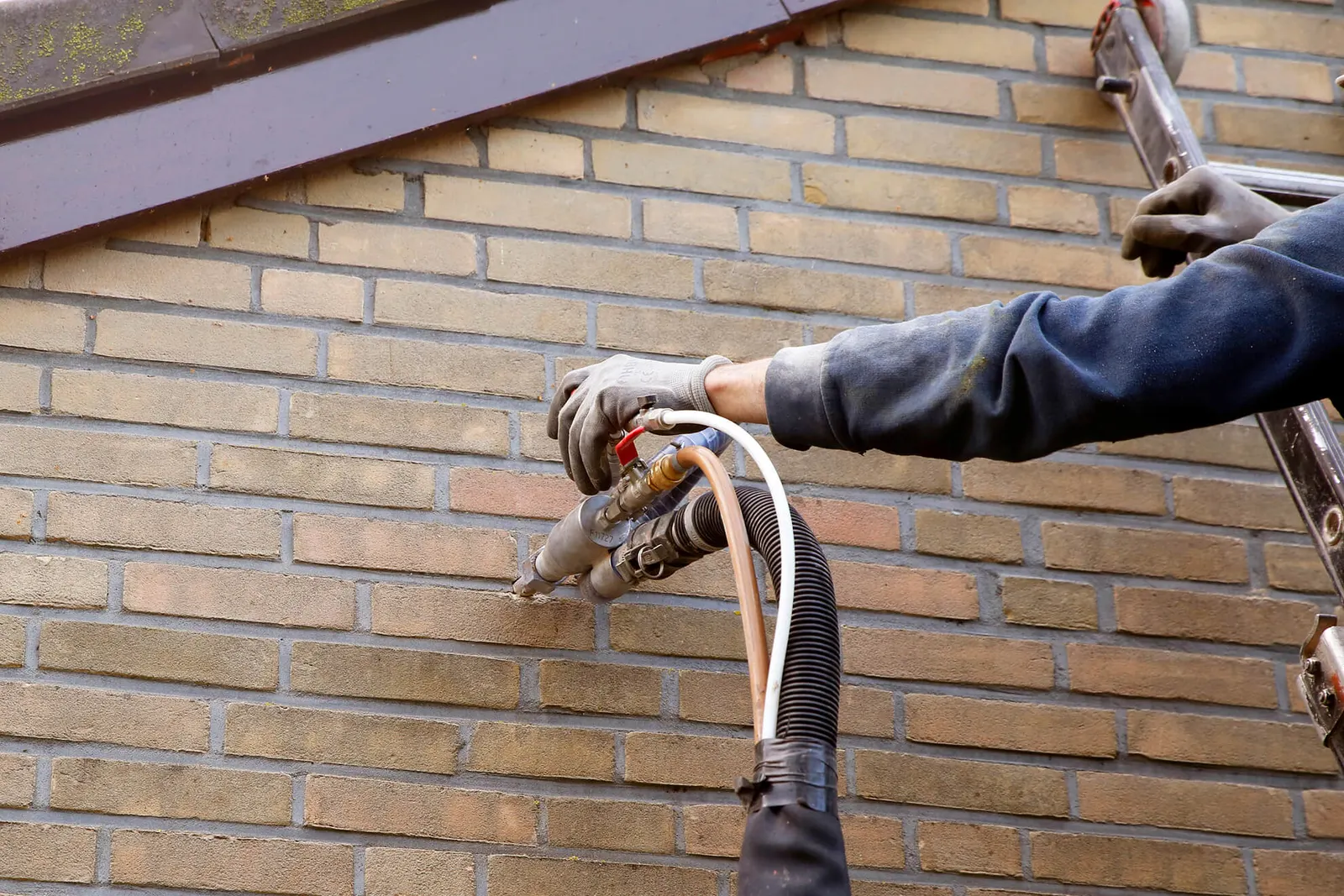
Bead systems commonly use small expanded-polystyrene beads, often installed with a bonding agent as part of a specified system. The precise product and installation records matter. Seeing loose beads at one opening does not establish whether the whole installation was bonded correctly, how completely it fills the cavity or whether later work disturbed it.
Possible concerns include incomplete coverage, material escaping through unsealed openings and unsuitable details around vents or cavity boundaries. Moisture problems may involve external water entry, debris or bridging rather than the beads themselves absorbing water. Ask the surveyor to distinguish the material’s observed condition from the wall’s defects. A claim that beads are universally waterproof and therefore cannot be involved in any damp problem is too simplistic.
What mineral wool is and what can go wrong
Injected mineral-wool systems use fibrous insulation designed for a specified cavity application. Product properties and installation requirements vary, so avoid applying observations about an unrelated loft roll to an injected wall system. Identification should use available records and inspection evidence rather than colour alone. Material visible through a small opening may not represent its condition elsewhere.
Poor distribution, unsuitable installation conditions and water entering defective masonry can contribute to problems. Localised wetting or gaps may affect performance, but fibrous material does not automatically mean a wall is saturated or requires removal. If an inspection finds damp material, ask where it was found, what evidence identifies the water source and whether the same issue appears at other sampled points. The remedial recommendation should follow those findings.
Why foam needs accurate identification
The word foam covers different products and applications. Older injected cavity foams and other wall systems should not be confused automatically with modern roof spray-foam installations. Their chemistry, location and removal requirements can differ. If documentation is absent, the report should state the limits of visual identification and explain whether further investigation is needed before work is priced.
Some foam installations may show cracking, voids or deterioration, depending on the product and history. Bonded or rigid material can require different removal techniques from loose fill, so a generic extraction price may be misleading. Ask how the proposed method protects the masonry and what access is needed. Do not attempt chemical treatment or mechanical breakup yourself, and do not assume a suction-only approach is suitable for every material described as foam.
Installation gaps and later disturbance
A cavity may contain insulation without having consistent coverage. Missed areas, obstructions or incomplete installation can leave temperature differences across a wall. Later alterations, replacement windows, new openings or service work may disturb an originally satisfactory fill. A cold patch can be a useful clue, but it must be assessed alongside structural details and moisture rather than read as a direct image of a void.
Ask an inspector to map observations by elevation and height. One full cavity at low level cannot establish that the area above a window is equally filled. Thermal imaging may help under suitable conditions but does not replace direct inspection where important decisions depend on the result. A proposal to top up should explain compatibility with existing material and how the cause of uneven coverage will be addressed.
Rain exposure, masonry defects and cavity bridging
Wind-driven rain can challenge exposed walls, particularly where pointing, render, flashings or seals are defective. The relevant question is not simply whether an area has wet weather, but how that particular elevation sheds water. Shelter, orientation, construction details and maintenance all matter. A nearby house with the same material is not proof that your wall is either suitable or defective.
Mortar droppings, rubble and other obstructions can connect parts of the cavity or interfere with its intended drainage. Extraction may reveal these problems without automatically removing them. If bridging is identified, ask whether cavity clearance is included or requires separate access. Refilling an uncorrected cavity can recreate the conditions associated with the original complaint, even if a different insulation product is chosen.
Distinguish rain penetration from condensation
Mould in a corner does not identify the insulation material or prove a cavity failure. Condensation happens when moisture-laden air meets a sufficiently cold surface. Heating patterns, ventilation, occupancy and thermal bridges can all contribute. Rain penetration and condensation can also occur together, so finding one does not automatically rule out the other.
Energy Saving Trust’s damp guidance describes excess moisture, cold surfaces and ventilation as important parts of the picture. A useful assessment records indoor symptoms, outside defects and cavity findings rather than choosing an explanation from a single handheld moisture reading. Removing insulation without addressing indoor moisture management may leave mould unresolved, while ventilation advice alone will not repair a leaking gutter or defective external wall.
Condensation, heating and ventilation · Damp, mould and condensation
Choose repairs or extraction on evidence
The appropriate response may be a building repair, local investigation, clearance, extraction or a combination. There is no universal rule that wool must come out, beads should always stay or foam can never be removed. Ask the contractor to explain the diagnosed defect, the affected area and why the proposed work is proportionate to the evidence.
Before disturbing material, check any guarantee requirements and notify the relevant provider where appropriate. A written quotation should describe access, removal method, treatment of obstructions, waste handling, making good and completion checks. It should also identify exclusions and unresolved questions. Replacement insulation is a separate suitability decision, not an automatic follow-on sale attached to extraction.
When to call a professional
Arrange a professional assessment if you have persistent damp, unexplained cold areas, escaping fill or an uncertain material ahead of planned building work. Provide installation records and describe when symptoms occur. If a sales visit immediately produces a removal recommendation based only on the product name, ask for the inspection evidence and consider an independent opinion before proceeding.
A suitable report should describe the construction, material observations, external defects, moisture evidence and inspection limitations. For unfamiliar substances or potential hazardous materials, stop intrusive work and seek appropriately qualified advice. Where the concern includes structural cracking or electrical safety, bring in the relevant specialist. A cavity contractor’s scope should be clear about what it does not assess as well as what it does.
Request a free survey or quote for your walls
SmartStone Energy Solutions Ltd covers Shropshire and North Wales. Call 0800 0239 272 or WhatsApp 07519 147254, Monday to Friday, 9am to 5pm, to request a free survey or quote. Tell us whether the material is known, what symptoms you have noticed and whether any guarantee or previous inspection is available.
Photographs of affected rooms, outside elevations and existing paperwork can help explain the concern before a visit. You do not need to pull material out of the wall to identify it yourself. Discuss the assessment first, then any proposed repairs or removal. No product label alone can establish that extraction is necessary, and no replacement material should be promised as a cure for unresolved building defects.
Plain-text references: Energy Saving Trust, Cavity wall insulation, https://energysavingtrust.org.uk/advice/cavity-wall-insulation/ ; Energy Saving Trust, How to get rid of damp, https://energysavingtrust.org.uk/advice/fixing-damp-and-condensation/
Request a free survey and quote or call 0800 0239 272.
Frequently asked questions
Is mineral wool always responsible for cavity damp?
No. The material, installation, wall condition and exposure need assessment together. Damp fibrous insulation is a finding that needs explanation, not proof that every installation of the same type will fail.
Are beads guaranteed not to cause damp?
No blanket promise is justified. Even where a material resists water absorption, unsuitable walls, bridging and external defects can still create moisture problems in the overall construction.
Is cavity foam the same as roof spray foam?
Not necessarily. Establish the actual product and where it was installed. Advice about a roof application should not be transferred automatically to an unidentified material in masonry walls.
Can different materials be mixed during a top-up?
Do not assume compatibility. A professional needs to assess the existing system, product requirements, cavity condition and reason for any gaps before additional material is considered.
Does extraction remove rubble as well?
Not automatically. Insulation extraction and cavity-debris clearance can require different access and methods. Check the written scope if obstructions or mortar bridging have been identified.